ResearchFatherhood & Family
The gender convergence restarts, led by dads

This is a summary of the working paper, “Gender Convergence in Couples’ Time Use Following the COVID-19 Pandemic,” by Ariel Binder, a research fellow at the American Institute for Boys and Men.
The roles of men and women have been converging over the last century or more, largely due to women entering the workforce. Starting in the late 1960s, married women in particular entered the paid labor force in large numbers, reduced the time they spent on unpaid work at home, and transformed the American household. Claudia Goldin has called this a “quiet revolution”. Husbands’ time use changed much less by comparison, though a recent piece by Derek Thompson details some of the shifts that have occurred over a longer time horizon.
After 2000, the rate of convergence slowed and by the late 2010s it had largely stalled. Men’s and women’s employment rates, weekly work hours, and time spent on housework started to move more in parallel, leaving gender gaps largely unchanged.
But since the pandemic, convergence appears to have restarted. And this time, it is being driven more by changes in the time use of men than women—the first such shift in a generation. Using American Time Use Survey (ATUS) data from before and after the COVID-19 pandemic, this research shows that the gender gap in time use narrowed sharply in just five years:
- Among couples, the gender gap in weekly paid work hours fell by 4.3 hours—from 14.7 to 10.4 hours, a 29% decline. About three-quarters of that narrowing came from husbands cutting their hours; the rest from wives working more.
- The pace is historically fast. Among couples, the paid-work gap closed at 1.68 percentage points per year—faster than the 1.27 percentage points per year observed during Goldin’s “quiet revolution” from 1969 to 1992.
- College-educated fathers drove the biggest changes of all. They cut their paid work hours by six per week and raised housework and childcare by more than four. Noncollege fathers cut paid hours only slightly but raised housework and childcare by 2.7 hours per week—time that mostly came out of rest and leisure.
- Among couples with a child under 6, the gap in unpaid work at home (cooking, cleaning, and childcare) fell by 3.8 hours per week (20%). Almost all of that change came from fathers doing more. Roughly half came from more direct childcare, and half from other household tasks.
- The paid-work gap narrowed much more among college-educated parents with a child under 6. It closed by about 6 hours per week—from 16.7 to 10.7 hours—in just five years.
- Standard labor-market explanations explain relatively little. Post-pandemic shifts in men’s occupations and the rise of remote work together account for about 44% of the narrowing gap between college and noncollege fathers but almost none of the broader shift within both groups.
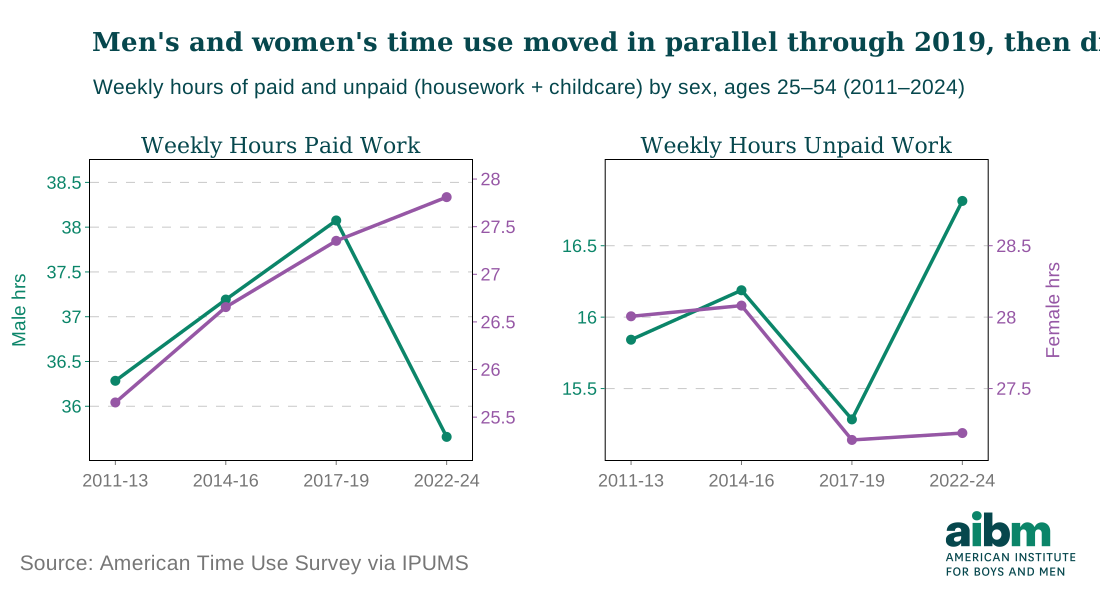
Figure 1
Inside couples, not among singles
The clearest pattern in the data is that the pandemic-era shift is a household phenomenon, not an individual one.
As Fig 2 shows, the paid work hours of single men and women followed parallel paths. Both groups saw small declines in weekly paid work hours, and the gender gap between them stayed close to its 2019 level. But among cohabiting or married couples, the picture is different: husbands’ weekly paid work hours fell sharply while wives’ rose.
As a point of comparison, in the period of greatest convergence from 1969-1992, the gender gap in couples’ paid-work closed at 1.27 percentage points per year. Since 2019, it has closed at 1.68. While the data are not perfectly comparable—earlier numbers come from CPS self-reports, while post-2003 figures come from ATUS time diaries—it does suggest a rapid convergence.
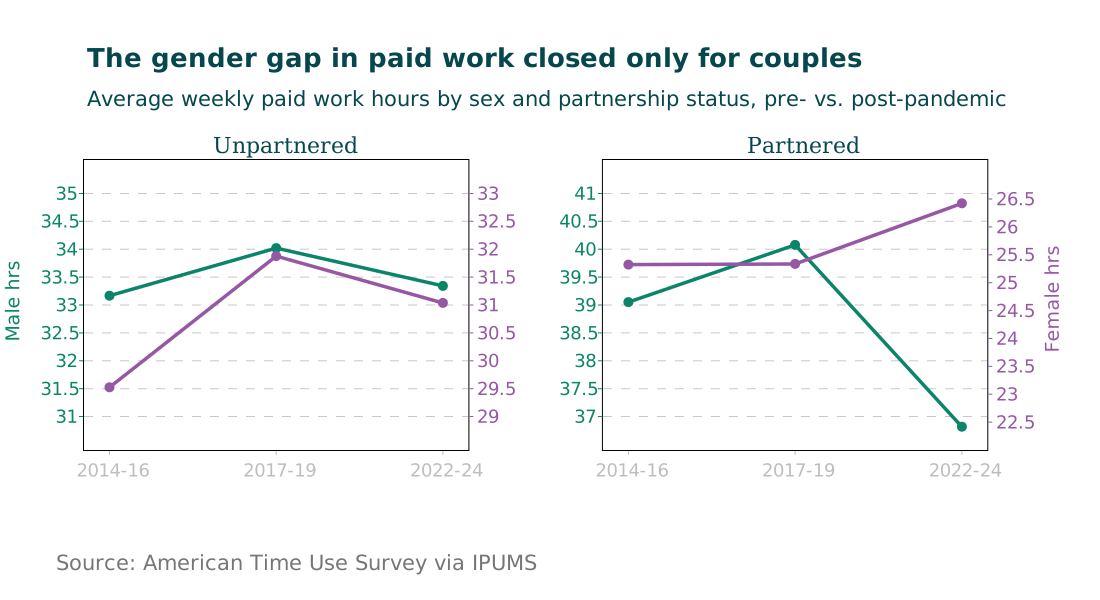
Figure 2
Fathers of young children are doing more at home
Historically, having a young child at home widens gender gaps in paid work and housework. While that is still true on average, the pandemic shifted fathers’ behavior most when young children were present.
Among couples with at least one child under 6 (hereafter described as “young children”), the gap in weekly housework and childcare hours fell from 18.6 to 14.8—a 3.8-hour narrowing (20%). Fathers did about 3.6 hours more per week split evenly between active childcare and other household tasks while mothers did modestly less.
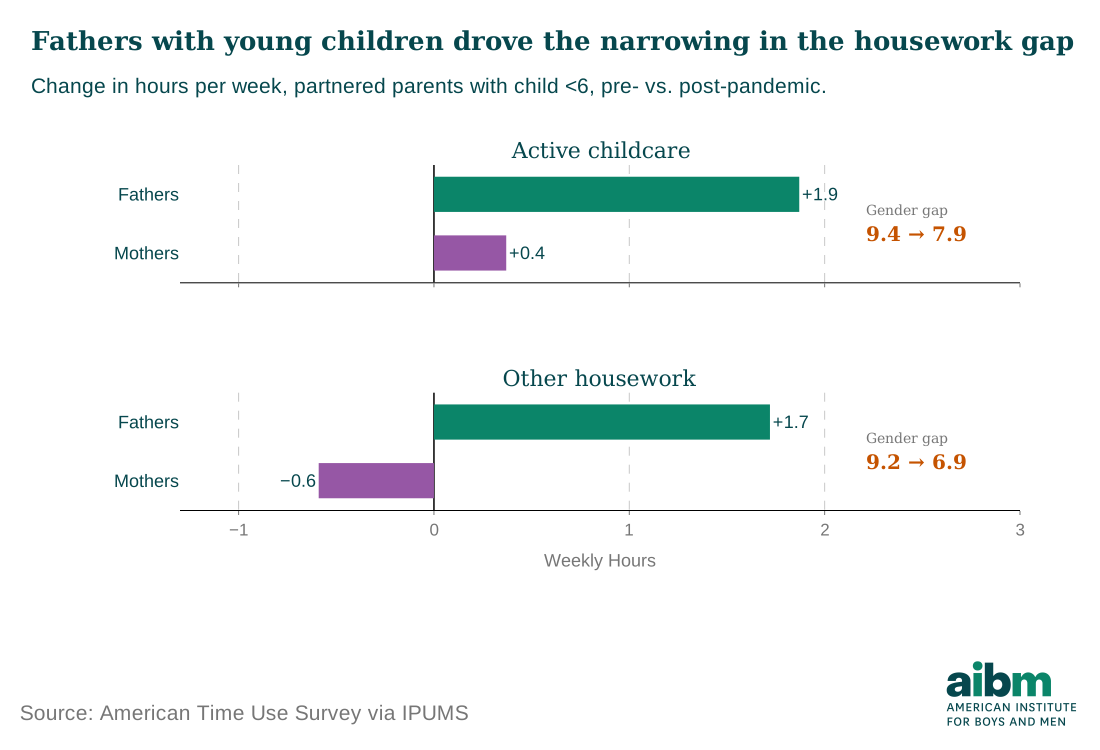
Figure 3
A class split, inverted
Among fathers with young children, college-educated fathers reduced paid work by 6 hours and increased housework and childcare by 4.4 hours. For noncollege fathers, paid hours declined slightly, while their housework and childcare rose by 2.7 hours. Both groups did more at home, but only college-educated fathers substantially reduced paid work. That narrowed the paid-work gap between college and noncollege fathers with young children—a notable shift given the widening college–noncollege employment gap among young men in prior decades. The partial reversal suggests a shift in priorities and expectations around fatherhood, particularly among the most-educated who have traditionally been more inclined to work long hours.
Overall, among college-educated parents with young children, the gender gap in paid work narrowed by about 6 hours per week—from 16.7 to 10.7 hours—in just five years. Among their noncollege counterparts, the gap narrowed much less, from 19.2 to 17.5 hours.
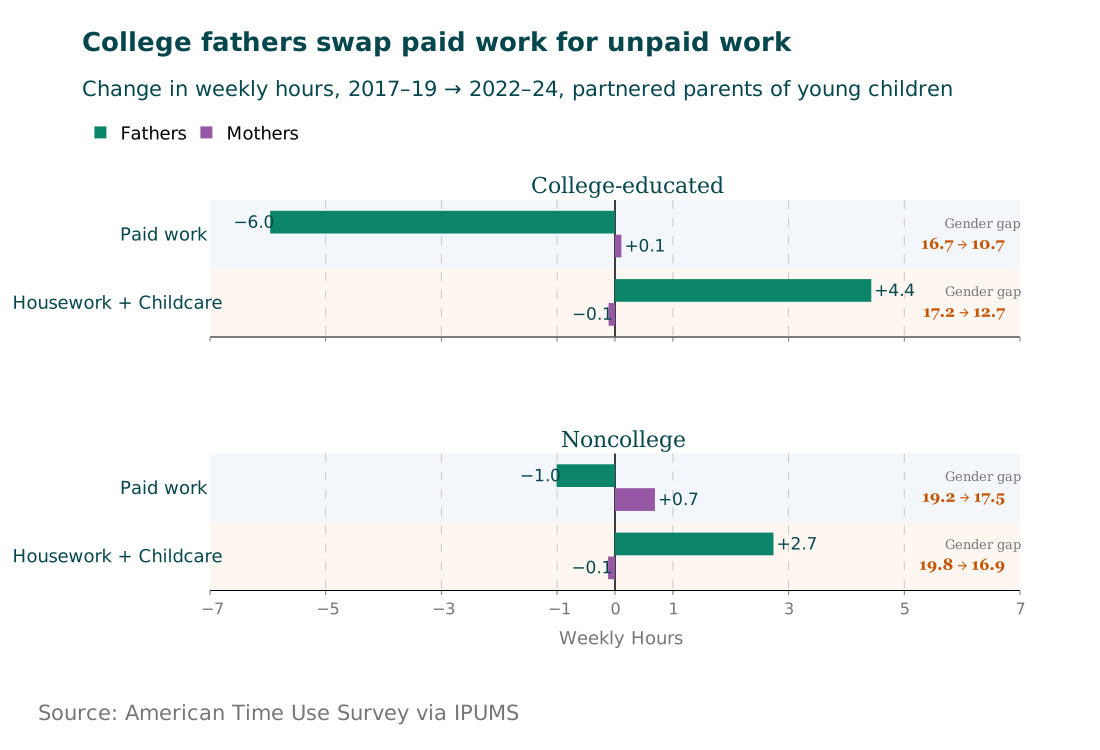
Figure 4
Sector shifts and remote work are only partial explanations
Two natural labor-market explanations could account for why men worked less for pay and did more work at home. First, the mix of jobs men hold changed after the pandemic. Some male-dominated sectors contracted while others grew, and the typical man’s workweek could have shrunk purely through that reshuffling. Second, remote work became broadly available, letting some men trade commuting and office time for time at home.
This paper tests how much these two mechanisms can explain both the shift among college-educated fathers compared with noncollege fathers, and the broader change in men’s behavior relative to women’s.
First: why did college fathers change their behavior more than noncollege fathers? Here, the two mechanisms account for about 44% of the college–noncollege difference in paid-work, and essentially all of the college–noncollege difference in housework and childcare. College fathers shifted into more remote-friendly jobs, while noncollege fathers shifted into longer-hours sectors.
Second: why did fathers overall—college and noncollege alike—cut paid work and do more at home? Here the two mechanisms explain very little. Within each group, as well as in aggregate, most of the change is left unexplained by what jobs men hold or by the rise of remote work.
Remote work’s direct effect on time use is also modest: it is associated with about 1.6 fewer paid-work hours and 1.9 more housework and childcare hours per week among partnered men, with college-educated fathers being slightly more responsive to remote scheduling. While remote-work incidence for college-educated young fathers more than tripled after the pandemic (from 11% of days to 37%) that increase alone cannot account for changes we see.
What remains—the large “residual” in the decomposition—may reflect a broader change in how fathers weigh paid work against time at home. . Early in the pandemic, Alon and co-authors hypothesized that the childcare binds of 2020–2021 and growth in flexible and remote scheduling could reshape prevailing gender norms and work preferences among households with children. The observed patterns are consistent with that hypothesis, though not yet proof.
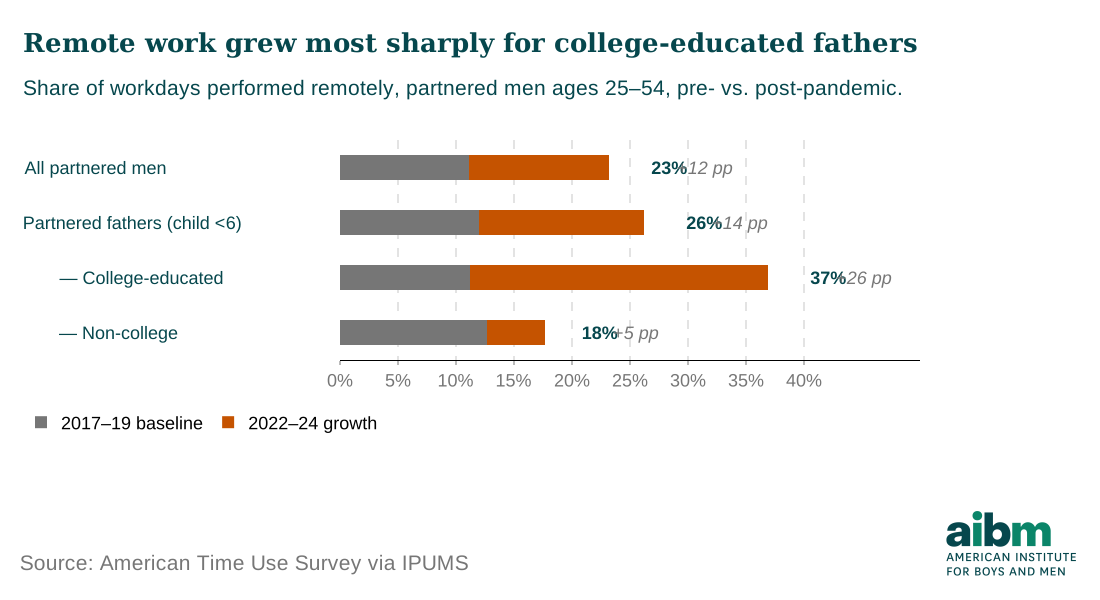
Figure 5
The bottom line
For 25 years, gender convergence in American time use had largely stalled. The ATUS data show that it has restarted—and for the first time, it is husbands and fathers, rather than wives and mothers, driving the change.
These results are descriptive, not causal. ATUS is a one-day diary pooled across multi-year windows, and the data cannot say for certain what is behind the residual shift in fathers’ behavior. Whether the patterns persist as young children grow up, and as the pandemic fades from memory, is an open question. If they do, the last five years may mark the start of a new chapter in the American household—one in which the next step toward gender convergence is taken by men.
Subscribe to our newsletter
Get the latest developments on the trends and issues facing boys and men.
Related Research

Fatherhood & Family
Dads are taking more parental leave than the headlines suggest
As state paid family leave programs have expanded rapidly across the United States, Anders Knospe and Richard Reeves find that fathers' leave-taking has grown dramatically, and that the gap between fathers and mothers is narrower than standard measures suggest.

Fatherhood & Family
A generation of lost men? The reality of NEET data
Explore NEET trends and the rise of “lost men”—youth not in education, employment, or training—shaped by gender, race, disability, and more.

Fatherhood & Family
Will college educated women find someone to marry?
A summary of a working paper by Clara Chambers, Benjamin Goldman, and Joseph Winkelmann examines the relationship between growing gender gaps in education and education gaps in marriage.