Health
The health gaps facing boys and men are wide, worsening in places, and largely absent from policy
American men live about five years less than American women. They are four times more likely than women to die by suicide but ten percentage points less likely than women to access mental health care. 15% of young men today say they don’t have a close friend, a five-fold increase since 1990. Yet men’s health remains an afterthought in public policy in the United States. AIBM seeks to address the health challenges facing boys and men through rigorous research, sound policy recommendations, and productive dialogue.
Curated Content
Check out some of our health resources below
Research Health

Young men and cryptocurrency: What the evidence shows
David Sasaki and Diego Nunez review recent evidence on cryptocurrency trading, which has become a mainstream financial activity in the U.S. especially among young men.

Is it inevitable that men die younger than women? Looking at evidence and policy solutions
Allen Downey analyzes life expectancy and cause-specific mortality data across the United States and other OECD countries from 2000 to 2023 to understand how much the life expectancy gap between men and women varies, which causes of death contribute most to it, and where policy might be most effective.

Marijuana use among men hits new highs
Marijuana use is rising among U.S. men, especially ages 26–34, with higher daily use and cannabis use disorder rates than women.

Data Spotlight: Suicide deaths among young men
Male suicide rates are rising—especially among young men. Explore key trends, data, and years of life lost from 2001–2023.

Male suicide trends by class and occupation
Men without college degrees face double the suicide risk—especially in high-risk jobs like construction and repair.

Male loneliness and isolation: What the data shows
Explore research-backed insights into male loneliness and isolation, highlighting key social and emotional trends.

The challenges facing boys and men in Greater Boston
A new report from Boston Indicators and the American Institute for Boys and Men examines the challenges facing boys and men in Boston, particularly in education, health, and employment.

Male homelessness in the United States
Male homelessness has risen from 339K in 2015 to 460K in 2024, with 39% unsheltered. Most states saw increases, highlighting the need for targeted support and housing stability.

How sports betting can harm young men
Legalized sports betting is linked to rising bankruptcies, lower credit scores, and financial distress—especially for young men in low-income areas.

The new race gap in drug overdose deaths: The rising toll on Black men
Overdose rates for Black and AI/AN men have surged, driven by fentanyl. Learn about the racial disparities and urgent need for targeted intervention.

Unnatural male deaths: Fatal injuries and the rise of drug overdoses
Fatal injuries have surged since 2020, mainly among men. Top causes: drug overdoses, suicide, and car accidents, with drug deaths up six-fold since 2001.

The state of working class men
This report outlines the current state of America’s working class men and describes recent trends in the key areas of employment, earnings, health, and family.
Dads rock: The evidence
The evidence is clear: Dads matter; they are doing more fathering than ever; they bring something extra to parenting; and they want to do more.
Six facts on men’s health
Men face significant health challenges. Compared to women, men have a lower life expectancy, higher COVID-19 mortality rates, and are four times more likely to die by suicide. However, there are very few public health goals and covered preventive services for men.

Where are the men? Male representation in social work and psychology
Men face a significant lack of representation in mental health professions despite the growing mental health needs among them.
Explore the data on male suicides by state
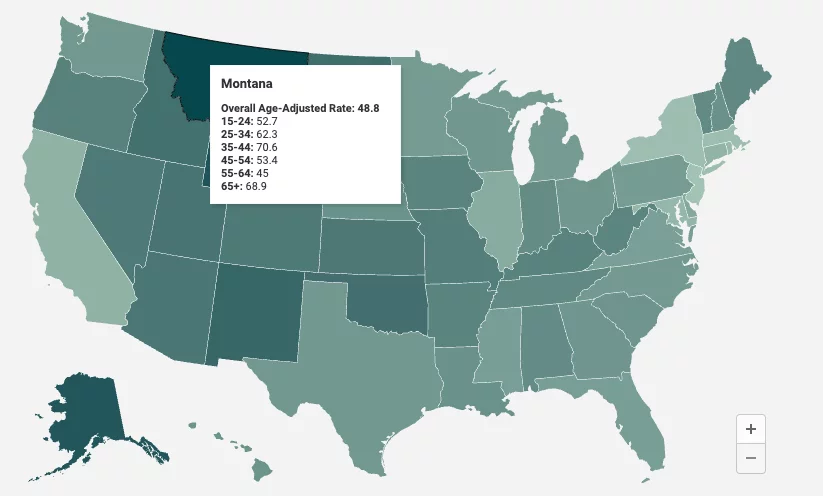
Explore the data on male suicides by state, broken out by age group, sourced from CDC data.

Male suicide: Patterns and recent trends
A look at male suicide patterns by age, race, geography and over time.

Washington State fact sheet
A fact sheet on the challenges boys and men face in Washington State
commentary Health
Nobody to call
Nobody to Call is a deep qualitative research project on friendship, community, and purpose among men without college degrees. Learn how the project emerged, what the researchers heard during their interviews, and what they made of what they heard.
What “Scrubs” teaches us about male friendship
How Scrubs shows the role of friendship, mentorship, and shared work in shaping young men into capable adults.
Mental health support is not reaching boys. It is time to listen deeply.
Support for boys mental health is falling short. Why young men turn to digital spaces—and how better tools and peer support can help.
Lessons from England on creating a men’s health strategy
A look at why a dedicated Men’s Health Strategy is needed to improve outcomes, reduce preventable deaths, and tackle inequalities.
Bands of brothers: How veterans groups build social connections among men and boys
Veterans embody “no one gets left behind,” showing how service and community can fight men’s loneliness and build lasting connection.
Talk to your boys: Tips for parents about mental health
Many young men in crisis aren’t asking for help—talk to your boys before silence puts them at risk. Excerpt adapted from “Talk To Your Boys”.
The silent majority supporting men’s health
Critical insights for advocates, policymakers, and organizations working to improve outcomes for men and boys.
Men’s health policies: Long overdue
Men face major health disparities globally, yet their needs remain overlooked in efforts toward sustainable development and health equity.
Smartphone gambling is a disaster
We aren’t meant to have a casino in our pockets.
Separation leads to suicide among men: Lessons for practitioners
Men face higher suicide risk after breakups. Pain, isolation, and shame play key roles. Targeted research, education, and support are crucial for prevention.
Men’s Health Month: Why it matters
Too many men are slipping through the cracks. Richard V. Reeves explains why men’s health and mental health matters for everyone.
What Adolescence gets right and wrong about incels
William Costello examines what the hit Netflix series Adolescence gets right—and wrong—about incels, online misogyny, and the challenges facing today’s boys and young men.
The social benefits of gaming for boys
Explore how gaming fosters social connection for teen boys, balancing benefits like friendship and skill development with risks such as addiction, harassment, and online safety concerns.
Thinking about drinking: A guide for men.
An exploration of how alcohol impacts men’s lives, touching on masculinity, loneliness, and strategies for change, emphasizing the need for gendered conversations.
Building a mental health system with men in mind
The focus on getting men through the therapy door has led to a neglect of what happens once they get there. Dr Zac Seilder explores the ways therapy can be more welcoming to men.
5 Things I changed my mind about as a feminist “Boymom”
Ruth Whippman challenges assumptions about boys, arguing that understanding their unique needs is crucial to both feminism and healthier masculinity.